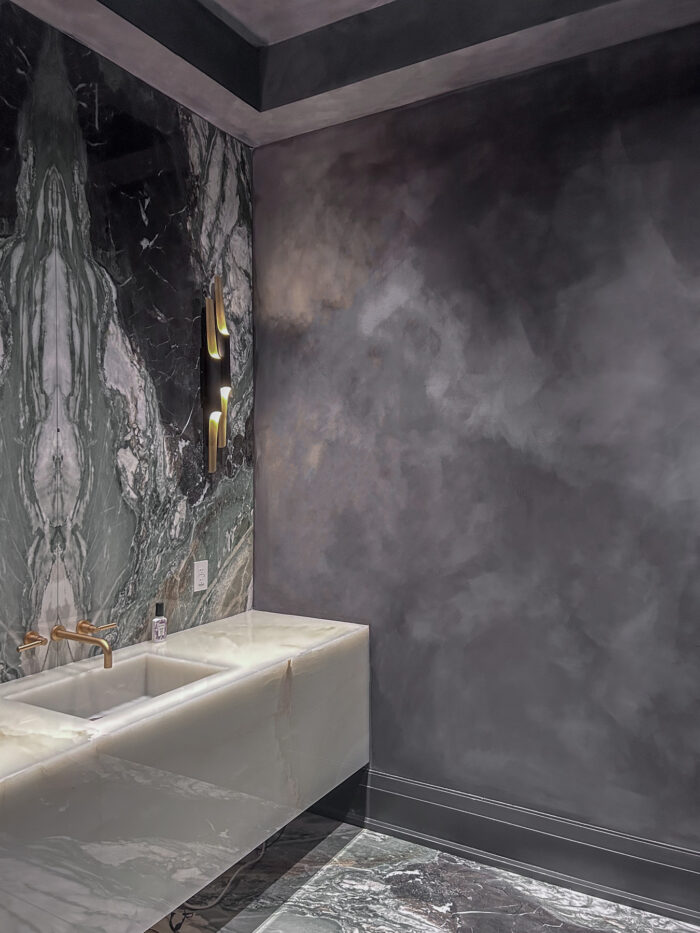
Should you use limewash in a powder room or bathroom? If you ask me, I would probably say no.
But if you ask me whether you can use limewash in your powder room or bathroom, my answer would be absolutely yes.
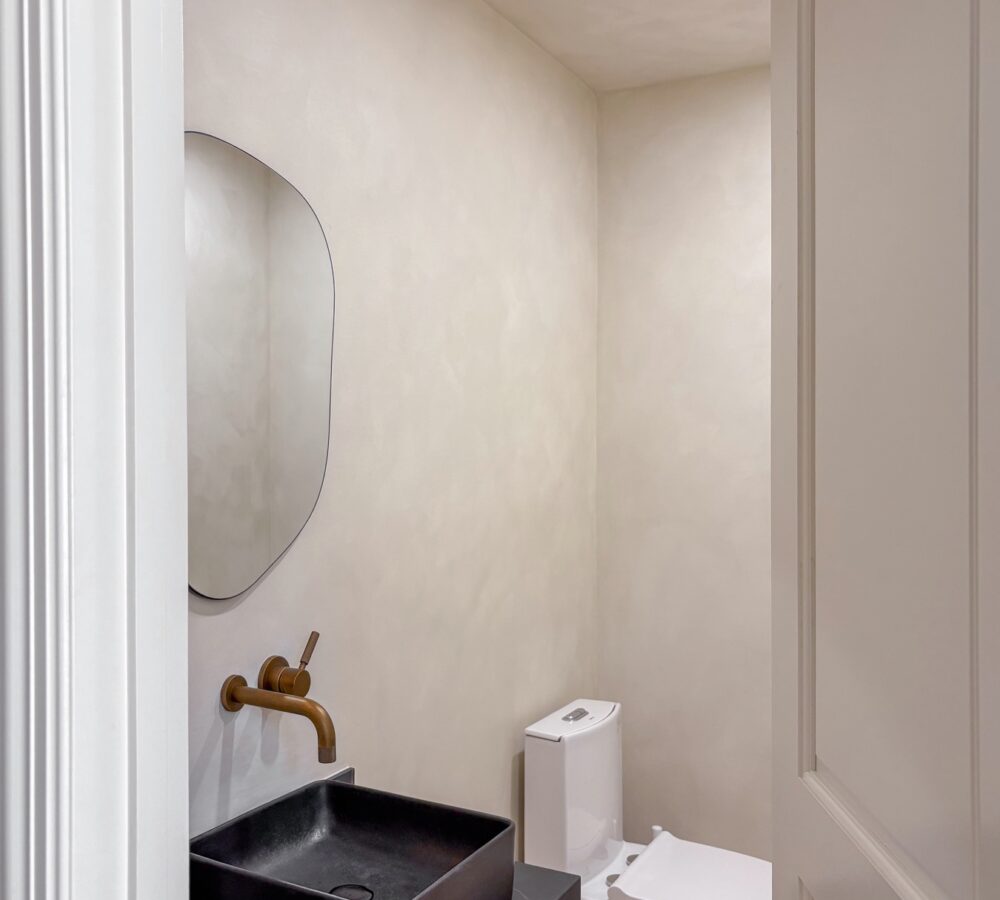
Confusing, isn't it?
Choosing the right decorative wall finish requires understanding not only how it looks, but also how it performs in everyday conditions.
At Paint Club, we specialize in limewash and other decorative finishes. We love the natural appearance, depth, and character of limewash, but we also believe customers should understand its limitations before deciding to use it.
Let’s look at where limewash makes sense in bathrooms, where it can become challenging, and what alternatives you should consider.
Quick Answer: Can You Use Limewash in a Bathroom?
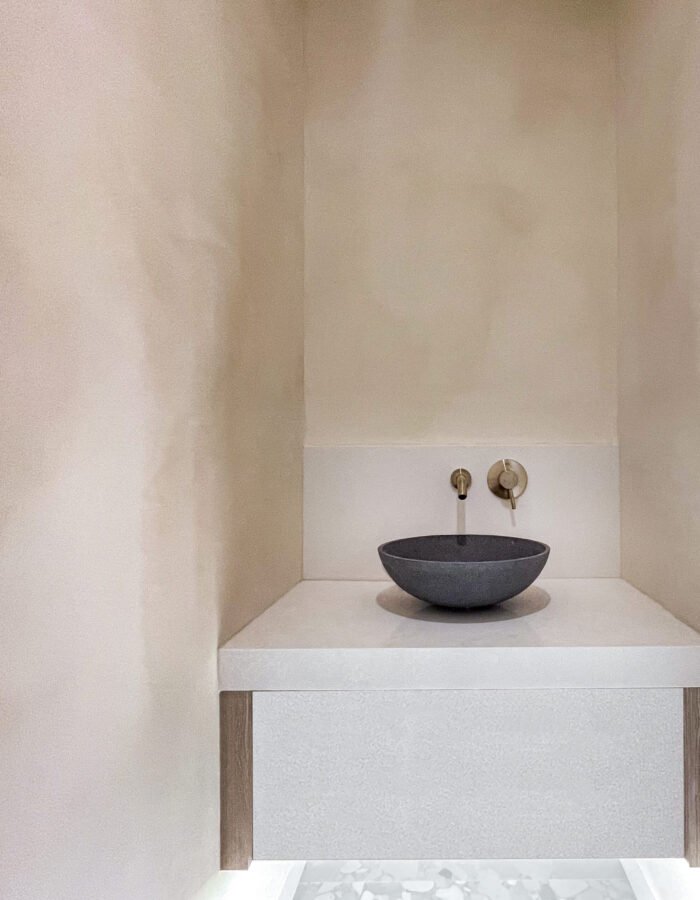
1. Can You Use Limewash in a Powder Room or Bathroom?
A powder room typically has a toilet and sink, with relatively little exposure to water and humidity. A bathroom with a shower or bathtub experiences considerably more moisture, temperature changes, condensation, and occasional water splashes.
These differences matter when choosing a wall finish.
Limewash is a mineral-based finish that is generally porous and breathable when left untreated. Unlike conventional acrylic paint, it doesn’t form the same type of continuous film over the wall.
This is one of the reasons people love it. It creates a natural, soft appearance with subtle colour variations while allowing water vapour to pass through the finish, depending on the product and underlying coating system.
However, the same characteristics that make limewash appealing can also make it less practical in certain environments.
An untreated limewash surface can absorb moisture, dirt, cosmetics, oils, and other substances. In a space where walls are regularly exposed to these elements, maintaining the original appearance can become challenging.
So, the question isn’t simply whether limewash can be applied in a bathroom. It’s whether you’re comfortable with how the material behaves in that particular environment.
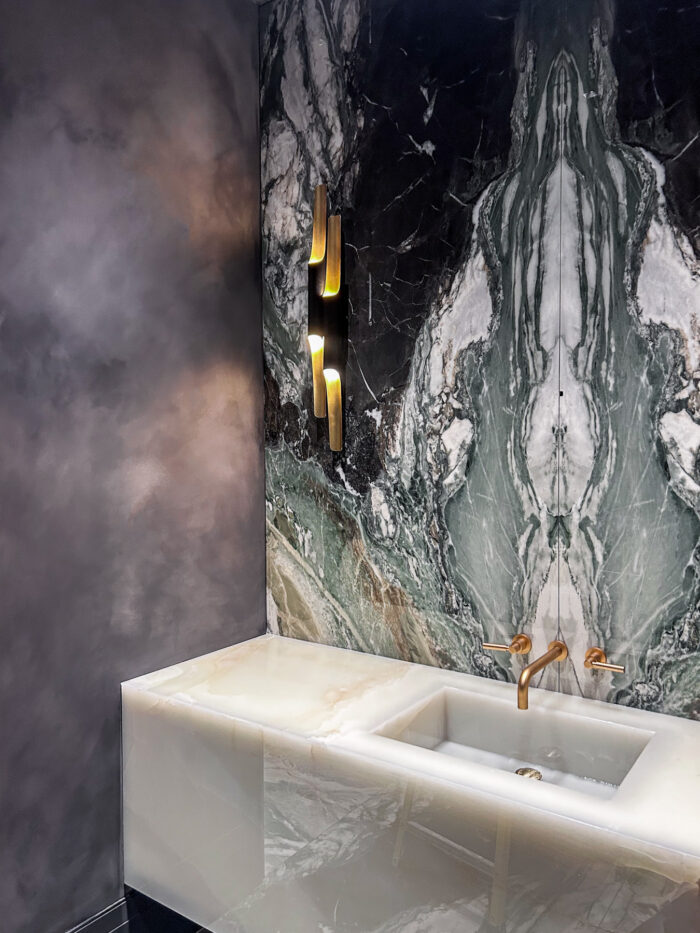
2. What If My Bathroom Has Natural Stone, Concrete, or Cement Walls?
If you have natural mineral surfaces such as suitable cement-based plaster, concrete, or compatible masonry, limewash can be an excellent choice.
Limewash has a long history of being applied to mineral substrates. These surfaces can provide the absorbency needed for the material to bond and develop its characteristic appearance.
In suitable conditions, the finish can integrate beautifully with the surrounding architecture, creating a cohesive, natural look.
One advantage of working with an appropriate mineral substrate is that you may not need the same type of specialized mineral primer required when applying limewash over conventional painted drywall.
However, not every concrete, cement, or stone surface is automatically suitable. Some surfaces are too smooth, dense, contaminated, previously sealed, or otherwise incompatible. Proper assessment and product-specific preparation are still necessary.
Natural stone also varies significantly in porosity and composition, so the surface should always be evaluated before application.
My recommendation: If your bathroom already features compatible natural mineral surfaces and you want to preserve a natural, breathable finish, limewash is certainly worth considering.

3. Is Limewash Practical on Drywall in a Small Powder Room?
Most modern homes use painted drywall, which requires a different preparation approach than natural stone or concrete.
Depending on the limewash product, drywall may require a specific mineral-compatible primer or base coat to provide the correct surface for application.
This adds another layer to the installation process, but it isn’t necessarily a disadvantage. A properly prepared drywall surface can produce beautiful limewash results.
The bigger consideration is how you use the room.
Imagine a small powder room where someone is applying makeup, washing dirty hands after gardening, or cleaning up after working outside.
Over time, tiny particles of dirt, oils, cosmetics, and other substances can come into contact with the walls. Because untreated limewash is porous, these contaminants may penetrate the surface and become difficult to remove without affecting the finish.
A conventional washable wall paint may be much more practical in this situation.
This doesn’t mean limewash cannot be used in a powder room. It simply means you’re choosing an aesthetic finish that may require more care than a conventional painted wall.
4. Can You Seal Limewash to Make It More Suitable for a Bathroom?
Depending on the manufacturer’s system, an appropriate protective treatment can help reduce surface absorption and make the finish easier to maintain.
However, there is a trade-off worth understanding.
One of the main reasons people choose limewash is its natural mineral character, including its ability to remain vapour-permeable when used as an appropriate unsealed system.
Adding a sealer can change some of these characteristics.
Depending on the product, sealing may reduce breathability, alter the colour, deepen the appearance, change the surface sheen, or affect the way the wall feels.
In other words, you’re modifying the original finish to gain additional protection.
And this brings me to an important question:
If you’re choosing limewash for its natural characteristics but then sealing it to make it behave more like conventional paint, is it still giving you everything you originally wanted?
There is no universally correct answer. Some homeowners prioritize the appearance and are perfectly happy with a protective treatment. Others specifically want an untreated mineral finish and prefer to preserve its original characteristics.
Neither choice is wrong.
It’s simply important to understand what you’re gaining and what you’re potentially giving up.
Also, a sealer does not automatically make limewash waterproof. A sealed decorative wall should not be treated as a substitute for a properly waterproofed shower or wet-area system.
Always follow the manufacturer’s recommendations for the specific limewash and protective product being used.
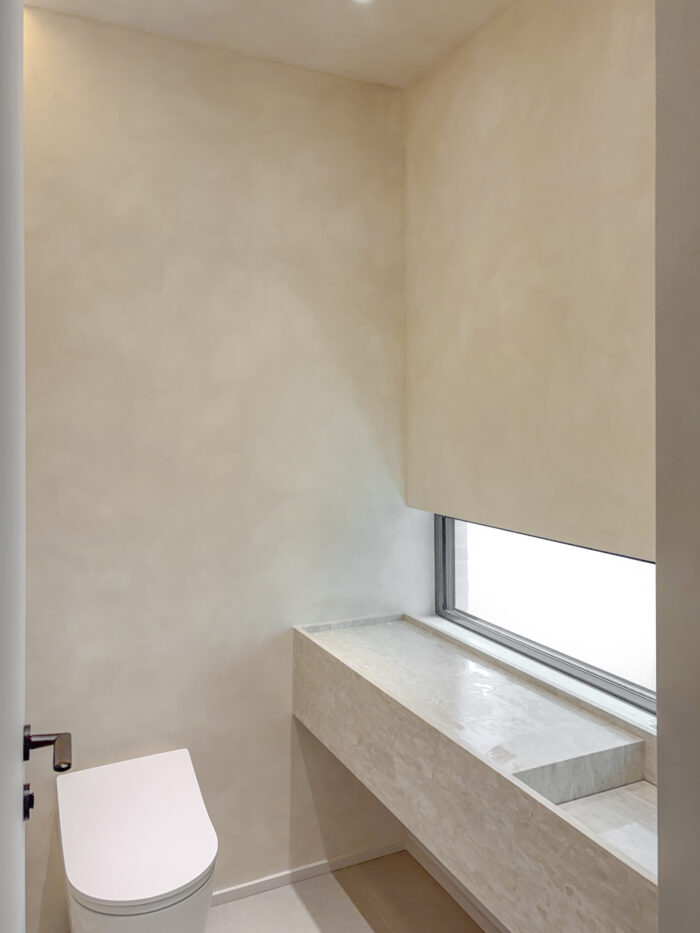
5. Can You Use Limewash Inside a Shower?
Standard decorative limewash is generally not something I would recommend applying directly inside a shower.
A shower environment involves repeated direct water exposure, standing moisture, cleaning products, and considerable humidity. These conditions require a properly designed waterproofing and finishing system.
If you love the appearance of limewash but want it inside a shower, you should investigate specialized systems specifically designed and approved for wet areas.
Depending on the project, alternatives may include microcement or other decorative coating systems installed over an appropriate waterproofing assembly.
It’s important to understand that microcement itself is not automatically waterproof. The complete system, including substrate preparation, waterproofing, protective coatings, and installation details, must be suitable for the intended application.
For most residential bathrooms, I would recommend keeping conventional limewash away from direct shower exposure and using a more appropriate finish in those areas.
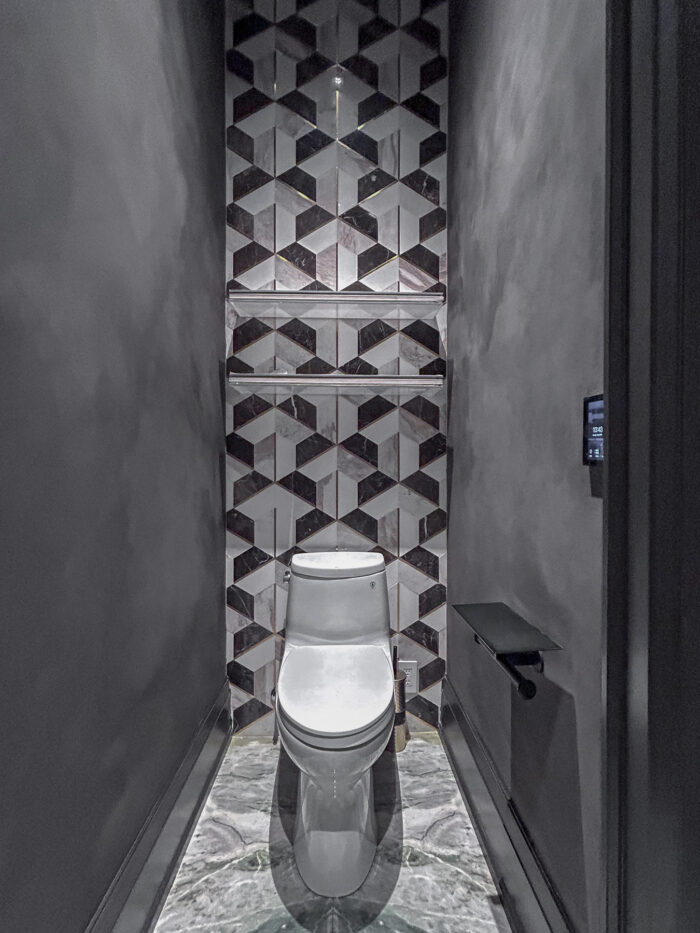
6. How Does Bathroom Humidity Affect Limewash?
Bathrooms experience different humidity conditions depending on their size, ventilation, and frequency of use.
During colder months, indoor heating can lower relative humidity, while showers and baths introduce localized moisture into bathrooms. Poor ventilation can allow condensation to accumulate, particularly in smaller spaces with limited airflow.
These conditions don’t automatically prevent you from using limewash, but they should be considered when choosing the finish.
An effective bathroom exhaust fan is important. It helps remove excess moisture and reduces condensation on walls and ceilings.
In smaller powder rooms without showers, humidity is generally less of a concern. In full bathrooms with frequent shower use, ventilation becomes considerably more important.
It is also worth remembering that breathable walls are not a replacement for ventilation. Even a natural mineral finish benefits from proper moisture management throughout the home.
Before choosing limewash, consider how frequently the bathroom is used, whether there is an effective exhaust fan, and how close the finished walls will be to water sources.
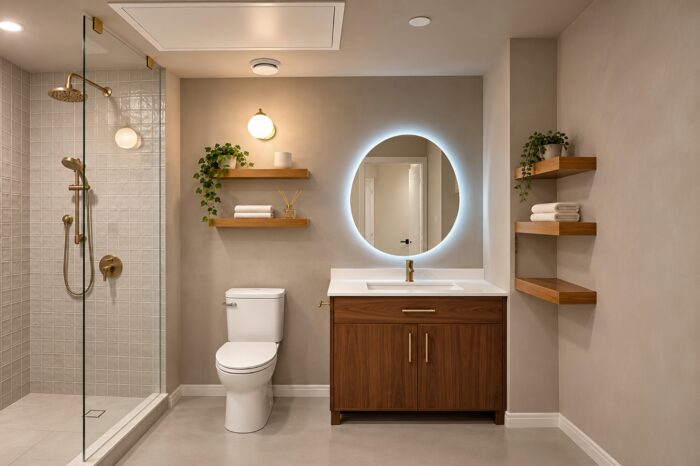
7. What Is Better for a Bathroom: Limewash, Microcement, or Conventional Paint?
Here is a simplified comparison:
| Finish | Appearance | Moisture considerations | Maintenance |
|---|---|---|---|
| Untreated limewash | Natural, matte, mineral variation | Porous; not suitable for repeated direct water exposure | More delicate |
| Sealed limewash | Natural appearance with potentially altered sheen and texture | Depends on protective system | Generally easier than untreated limewash |
| Microcement | Seamless, contemporary, stone-like appearance | Can be suitable for wet areas as part of an approved waterproof system | Depends on protective coating |
| Quality bathroom paint | Consistent, conventional painted finish | Available in washable moisture-resistant formulations | Generally easiest |
For a powder room where appearance is the priority, limewash can be a fantastic choice.
For a busy family bathroom, I would consider a protective system or a more practical alternative.
For a shower, I would look at a properly specified microcement system or another suitable wet-area finish rather than standard limewash.
The best material isn’t necessarily the most expensive or fashionable one. It’s the one that works for the way you actually use your space.
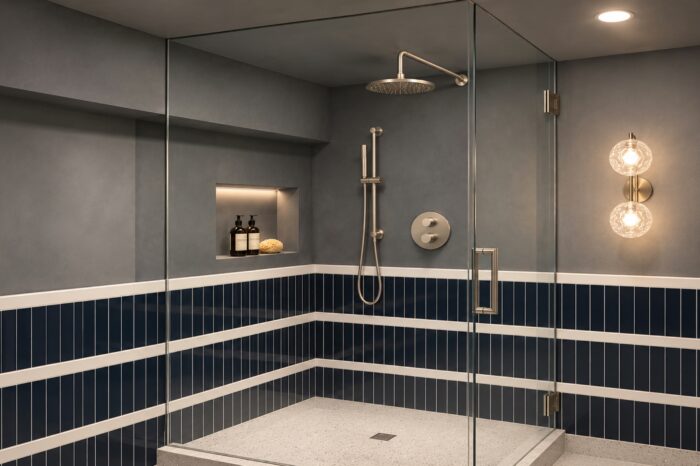
8. How Do You Maintain Limewash Walls in a Bathroom?
First, proper ventilation is essential. Use an effective bathroom exhaust fan to help manage humidity and condensation, particularly in smaller spaces.
Second, try to avoid direct water contact with untreated limewash. If water or other substances splash onto the wall, address them promptly and gently, following the manufacturer’s cleaning recommendations.
Third, avoid aggressive scrubbing or conventional household cleaning products unless the manufacturer specifically approves them. These can damage or change the appearance of the mineral finish.
Finally, understand that untreated limewash is not a conventional washable paint. Some natural variation, minor changes, and signs of use may develop over time.
For some homeowners, this is part of the appeal. For others, it may become frustrating.
It’s better to understand this before installation than to discover it after the bathroom is finished.
Final Thoughts: Is Limewash the Right Choice for Your Bathroom?
My answer remains the same: probably not for everyone, but absolutely yes for the right project.
If you have natural stone, suitable concrete, or cement-based walls and appreciate the character of natural mineral finishes, limewash can be a beautiful addition to your bathroom.
If you have a small, heavily used powder room with painted drywall, frequent splashing, and a lot of everyday activity, you may find that conventional paint or a protective decorative finish is more practical.
And if you love the look of limewash but want additional protection, sealing may be an option, provided you understand how it changes the finish and follow the manufacturer’s specifications.
At the end of the day, it’s about deciding what is more important to you.
Is it the natural, breathable character of untreated limewash? Is it the visual appeal? Or is it easy maintenance and resistance to everyday use?
Sometimes, choosing a beautiful material means accepting a few compromises. And sometimes, choosing a different material is simply the smarter design decision.
At Paint Club, we believe in helping clients make informed decisions rather than recommending limewash for every surface and every room.
We specialize in limewash, lime plaster, and microcement applications. If you’re planning a bathroom renovation and aren’t sure which decorative finish is right for your space, we’d be happy to help you explore the options.
Beautiful design should look great, but it should also work for the way you live.